|
SKEPTICS:
TECHNICAL REASONS WHY SKEPTICS REMAIN STUBBORN:
A LAWYER ON ‘STUBBORN SKEPTICS’
By Retired attorney Victor Zammit
After 22 years of dealing with all kinds
of paranormal skeptics, I can relate to 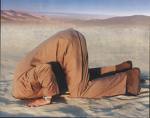 you
there are at least seven reasons why closed minded skeptics
tend to remain stubborn about their skeptical beliefs –
and why some of them unreasonably attack those who scientifically
and empirically investigate evidence for the paranormal
. you
there are at least seven reasons why closed minded skeptics
tend to remain stubborn about their skeptical beliefs –
and why some of them unreasonably attack those who scientifically
and empirically investigate evidence for the paranormal
.
Of course, the seven reasons below can apply
to any person who inflexibly holds strict subjective, personal
beliefs. The six reasons could equally apply to any Fundamentalist
– religious or secular.
My experience with closed minded skeptics is that they do
not investigate the evidence. Basically, they completely
reject any information which is not consistent with their
own cherished skeptical beliefs - even if it is scientifically
supported.
My experience also tells me that theses closed minded skeptics
do not have skills, competence and the ability to perceive
the paranormal with true empirical equanimity - in an objective,
scientific balanced way:
1. ‘RATIONALIZATION
THROUGH COGNITIVE DISSONANCE’: ‘Cognitive
dissonance’ is a term used by psychologists to describe
the discomfort that arises when people are confronted with
information fundamentally inconsistent with their beliefs.
When a materialist is confronted with highly persuasive
evidence for the paranormal-afterlife the materialist will
deny it has any validity. This is because the evidence will
elicit anxiety, increase his blood pressure, sweat etc.
Denial will follow. The materialist will become angry, hostile
and even aggressive. He will try to reduce anxiety by rationalizing
his beliefs and going into extreme DENIAL.
2. ‘CATHEXIS’:
This is another term in psychology which explains that some
people may have a very powerful – usually unconscious
super-glue connection with an idea or a thing. Applied to
the skeptics this is where a class of skeptics are ‘cathexed’
to closed minded skepticism. Because the connection is powerful
and unconscious, they will attack their source of anxiety
– the person who puts forward the evidence for the
paranormal. So, one cannot use logic, science or repeatable
and objective evidence to try to reverse their cathexis.
3. NEUROLINGUISTIC
PROGRAMMING (NLP) states that when these
skeptics are confronted with information which is fundamentally
inconsistent with their own deeply cherished beliefs, the
mind of the skeptic will DELETE that information. This is
because the new information will give a great deal of anxiety
to the skeptic. As with ‘cognitive dissonance’
above, the skeptic will experience anxiety, disturbance
of his ‘comfort zone’. This accounts for the
skeptic going into complete DENIAL. The more aggressive
skeptics will even cheat, mislead and lie about the real
situation.
4. ENVIRONMENTAL
PROGRAMMING – ‘environment determines
perception’: there is a saying that by and large,
the environment you were born in will shape how you will
see the world. If a Western skeptic from New York was born
in India, more likely than not the skeptic would be a Hindu.
If born to a radical, extremist Islamic family, the skeptic
would be a Moslem. If born to an orthodox Jewish family,
the skeptic would be an orthodox Jew. One needs to have
skills to rise above environmental conditioning and programming.
5. BRAIN-EXPLANATION FOR 'CLOSED
SKEPTICISM': Here is another explanation
for the stubbornness of closed- minded skeptics. It's the
biological argument for closed-skepticism. When you have
a rigid belief system the neurons in the brain fire in a
certain defined network. So if information (e.g. afterlife
evidence) comes into the brain and contradicts the rigid
belief system (skepticism) those neural pathways will fire
in the same old way and will not de-code the new information.
It’s just like a filter. It's only when the skeptic
has a dramatic experience that a new neural pathway is established
and the old one gradually falls into disuse. Belief systems
are fundamental to filtering reality.
6. PRIMARY MOTIVATION:
MONEY, POWER AND STATUS. There is also a
very tiny minority who choose to be closed minded skeptics
for career advancement and/ or to make money, to attain
influence and celebrity. For example, you may get a scientist
who will reject the paranormal because he/she can get funding
for opposing the paranormal. These people will never listen
to logic, to science, to rational reasoning, to common sense.
They can’t move from their position because they would
lose money, power and status.
7. THE
'SMORGASBORD ARGUMENT': Professor Stephen
Hawking, the astronomer, is most notorious for using this
'SMORGASBORD' argument - picking and using only the information
that substantiates his own negative prejudices. This closed
-minded skeptical professor does not know that in a court-room
situation his 'smorgasbord argument' would be torn to shreds.
Why? Because he would be cross-examined on the critical,
most vital evidence that he deletes - that fundamentally
contradicts his deeply entrenched negative prejudices. This
closed-skeptical scientist makes a huge error thinking that
he is an expert in law as well. Wrong! A litigation lawyer
has exclusive technical knowledge of what is relevant, what
is evidentiary what is essential admissible evidence - certainly
not an astronomer!
8. 'HYPNOTIC EFFECT':
those skeptics who are blatantly irrational, illogical and
unreasonable about the paranormal or the afterlife evidence
could be suffering from a powerful negative 'hypnotic effect.'
Some years ago I sent clear, easily identifiable afterlife
evidence to rebut to a couple of hard-line skeptics. Their
reply was, "where is the evidence?".
Yet non-aligned scientists easily identified the same
evidence sent to them. It is possible that skeptics
at one time in their life experienced a 'parallel hypnotic
directive' to encumber their mind that there is no afterlife
or paranormal evidence. This is exactly what happens when
we see hypnotists on stage tell a couple of our friends
who volunteer to be hypnotized on stage - when tranced are
told that they will be eating an apple. But the hypnotist
gave them an onion to eat, NOT an apple. The hypnotized
subjects COULD NOT IDENTIFY THE EVIDENCE and refused to
believe they each ate an onion! Even after when they were
taken out of the hypnotic state - all subjects stated 'the
apple was really delicious' - as was directed by the
hypnotist for the subjects to believe even when they were
put out of trance.
9. 'Being Spiritually Retarded':
first, there is no link between
intelligence and being spiritual -( notice I said 'spiritual'
NOT 'religious.') An atheist could be 'spiritual' (or highly
ethical) when he-she does voluntary work for the benefit
of others without a thought of making some kind of profit
for him/herself. But there is a class of closed minded skeptics
who may be highly intelligent but are spiritually retarded
- meaning they have not reached a stage in life where they
can perform 'secular' spiritual work for the benefit of
others - a kind of selfless service. Nor can they objectively
identify legitimate afterlife evidence.
Victor Zammit November 2011
A LAWYER PRESENTS THE EVIDENCE FOR THE AFTERLIFE
http://www.victorzammit.com/
| 